Georgia's Tea Regions
Georgia is a country of remarkably diverse landscapes, spanning from the jagged, snow-capped peaks of the High Caucasus to the arid southeastern deserts, and from the humid coastal swamps of the Black Sea to thick, subalpine forests. This dramatic geographical variance means that every valley and hillside possesses its own microclimate, which in turn exerts a profound influence on local culture and agricultural heritage. Just like the country’s world-renowned wine, Georgian tea possesses a distinct terroir – a combination of soil chemistry, elevation, and climate – that dictates the flavor, body, and subtle aromatic characteristics of the brew. In the hands of a skilled tea maker, these environmental variables are wielded as artistically as a master winemaker handles a vintage, resulting in a product that is a pure expression of its origin.
Beneficial Climatic Conditions for Tea Cultivation
Georgia is one of the most northerly regions of the world that produces tea on a commercial scale, lying several degrees of latitude above the northern boundary of tea regions in China and Japan. This extreme northerly position provides a unique advantage – unlike tropical estates where tea is harvested year-round in places like India, Sri Lanka, or Kenya, Georgia’s tea bushes undergo a vital winter pause in vegetation. Crucially, the proximity of the Black Sea and the protective shield of the Caucasus mountains allows this region to act as a heat reservoir, avoiding the extreme drops in winter temperatures which would otherwise render tea bushes unproductive at this latitude.
This period of dormancy allows the plants to rest and build up nutrient reserves, leading to stronger, more durable bushes and a tea leaf which concentrates beneficial secondary metabolites at a higher level. Furthermore, the frost of a Georgian winter acts as a natural cleanser, eliminating many of the pests that plague tropical tea gardens. This removes the necessity for chemical pesticides, ensuring an ecologically clean crop. While this shorter growing season results in lower production volumes, the trade-off is a high-quality leaf that rivals the celebrated high-mountain teas of China and Taiwan.
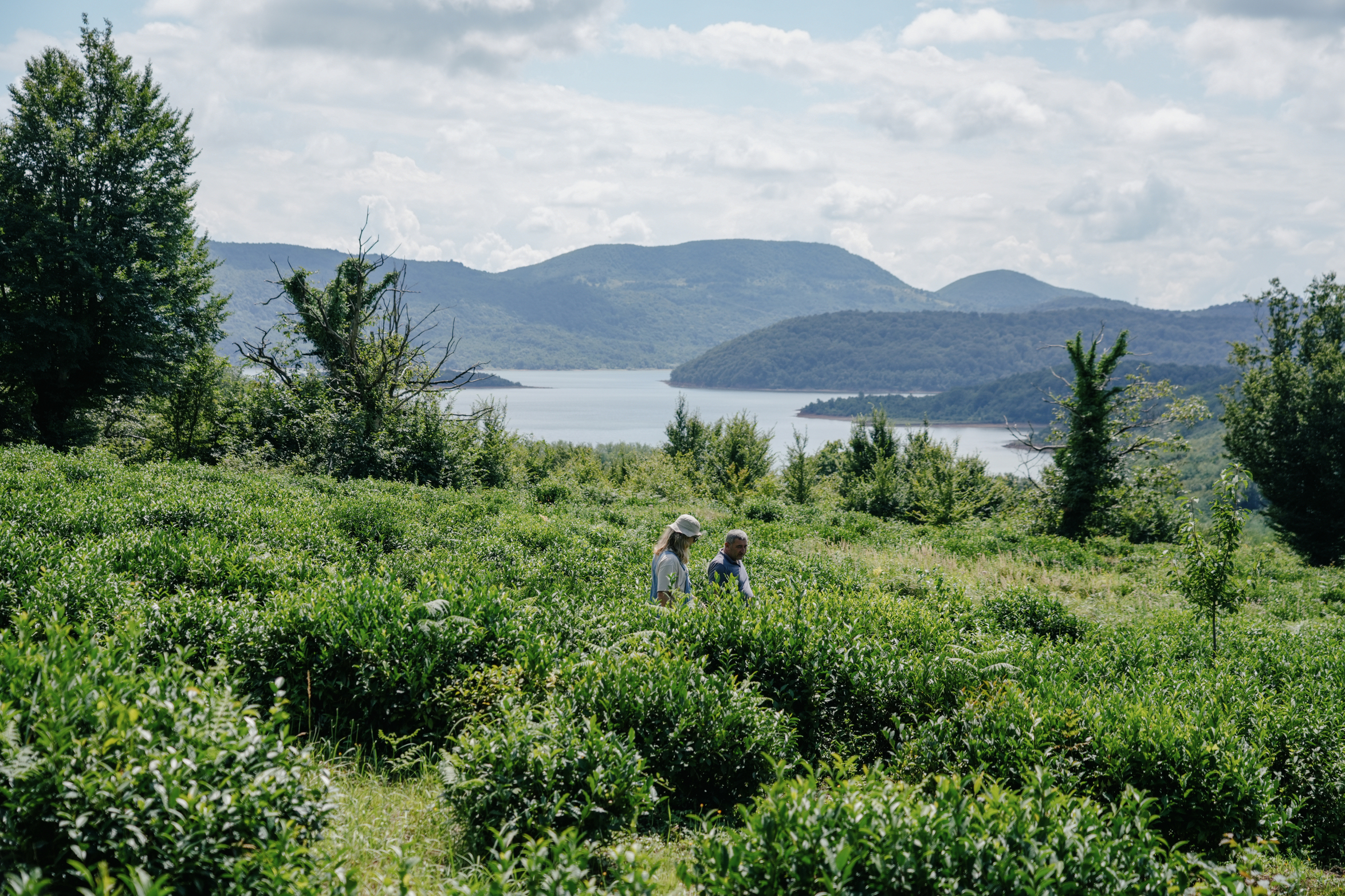
High altitude tea fields of Zemo Tea Gardens in Tkibuli region.
Imereti: Tea from the Wild Forest
The three main tea-growing regions of Georgia are Guria, Imereti, and Samegrelo. Georgia’s highest elevation plantations, reaching up to an altitude of almost 1000 meters above sea level, can be found amidst the rugged canyons and windswept plateaus of Imereti. This elevation factor, along with Imereti’s relatively far distance from the humidity of the Black Sea, give Imeretian tea an unusually complex and vigorous flavor profile compared to other Georgian teas.
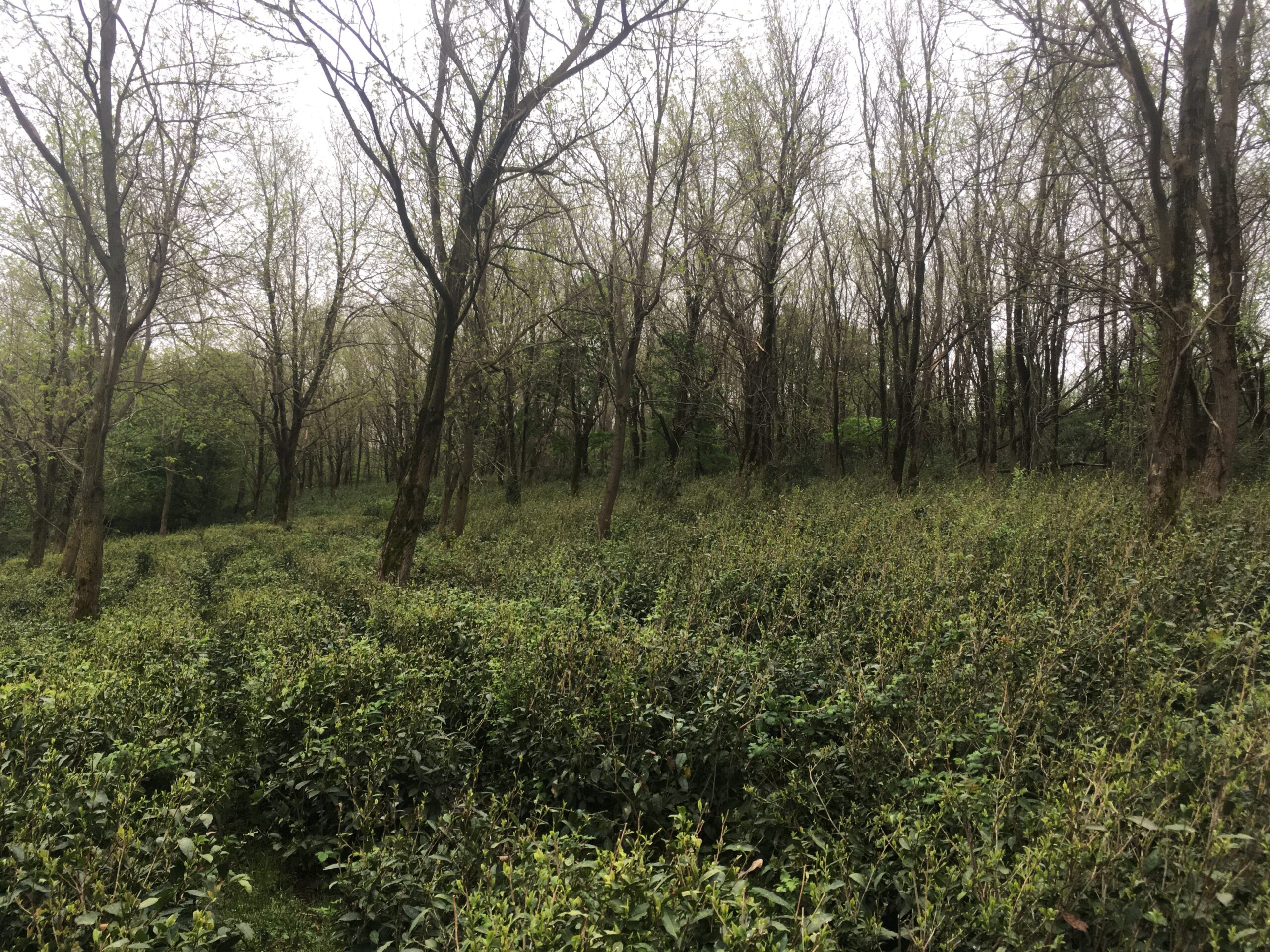
While Imereti hosts a small acreage of conventional plantation, tended to by producers like Koba Shekiladze and Renegade Tea Estate, Imereti is also home to some of the most outstanding rewilded tea estates in Georgia, where plantations abandoned in the 1990s have had native forest grow up around them. Here, artisans such as Tornike Shekiladze in the village of Gezruli or the Bitsadze brothers in the Terjola region work with these wild, shade-grown tea bushes to produce exclusive teas of outstanding depth and richness, including their signature spring whites.
Samegrelo: Rich Potential
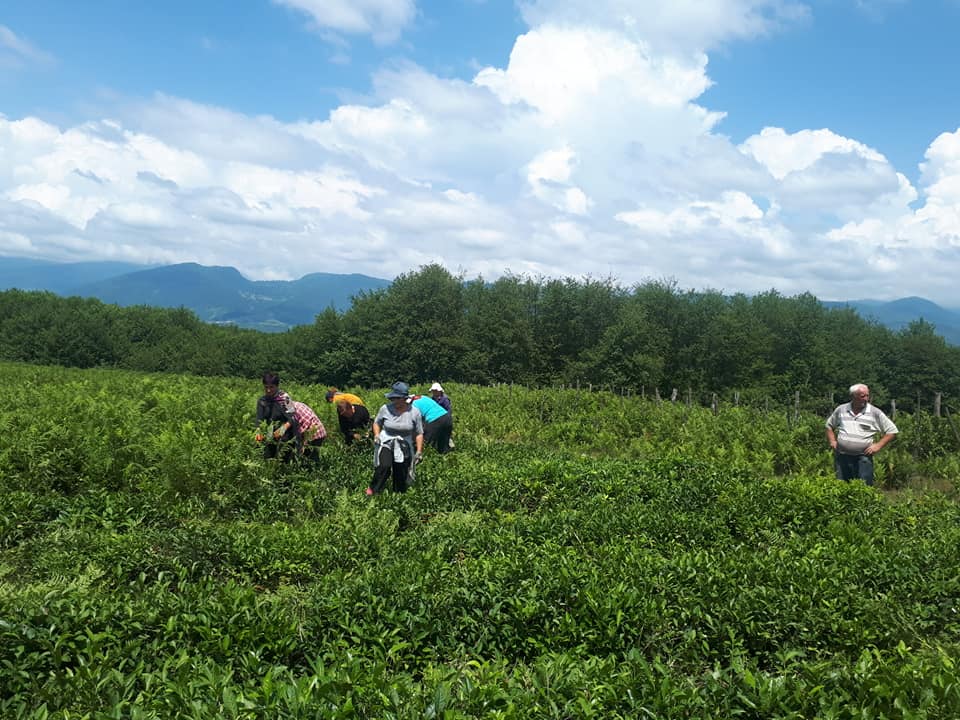
To the west of Imereti lies Samegrelo, a region of lush lowlands and high humidity. Here, the low rolling hills and abundance of rivers create a damp, subtropical environment where tea thrives in the rich, moist soil. Samegrelo is famous for the lavish, spicy flavors of its cuisine and the opulent yet orderly architecture of its village houses; Megrelian tea is no less rich in flavor and style. The high humidity levels in the Megrelian foothills allow for a consistent oxidation process, which tea makers like the legendary Nargiza Gvinjilia or the big factory at Martvili Tea use to their advantage. The result is often a smooth, mellow tea with distinctly sweet flavor notes and a substantial mouthfeel. The Samegrelo region is one of the least redeveloped in terms of its abandoned tea plantations, despite the efforts and hard work of its few local tea makers, but considering the excellent standard of teas being made by Megrelian artisans, it surely has the potential to rival the rest of Georgia's tea regions.
Guria: The Heartland
Guria sits in a pocket of foothills where the slopes of the Lesser Caucasus come within twenty kilometers of the Black Sea. This is a place of deep traditions, famous for its complex polyphonic singing and incredible hospitality, and it’s this region which is the historic heart of Georgian tea – the site of where the first tea bushes in Georgia were planted by Princes Mamia Gurieli and Mikheil Eristavi. Guria remained at the forefront of Georgian tea production throughout the Soviet period, when the premiere research institute for tea cultivation was located in Anaseuli village, and even today the majority of Georgian tea is grown in Guria.
Guria’s rolling hills are constantly bathed in a mix of salty sea breezes and cool mountain air. This balance of maritime and alpine influences creates a harmonious terroir that is neither too dry nor too humid. Additionally, the Gurian soil tends to be quite acidic, which helps the tea leaves to create a particularly high level of antioxidants. Prominent Gurian producers such as the Tenieshvili family’s organic estate, the Zhgenti sisters' hilltop factory, Andro Tavartkiladze's Nagomari startup, and Giorgi Maisuradze’s Shemokmedi Tea produce exceptionally well-balanced teas with a classical flavor that is representative of the region’s long-standing tea-making identity and unique microclimate.
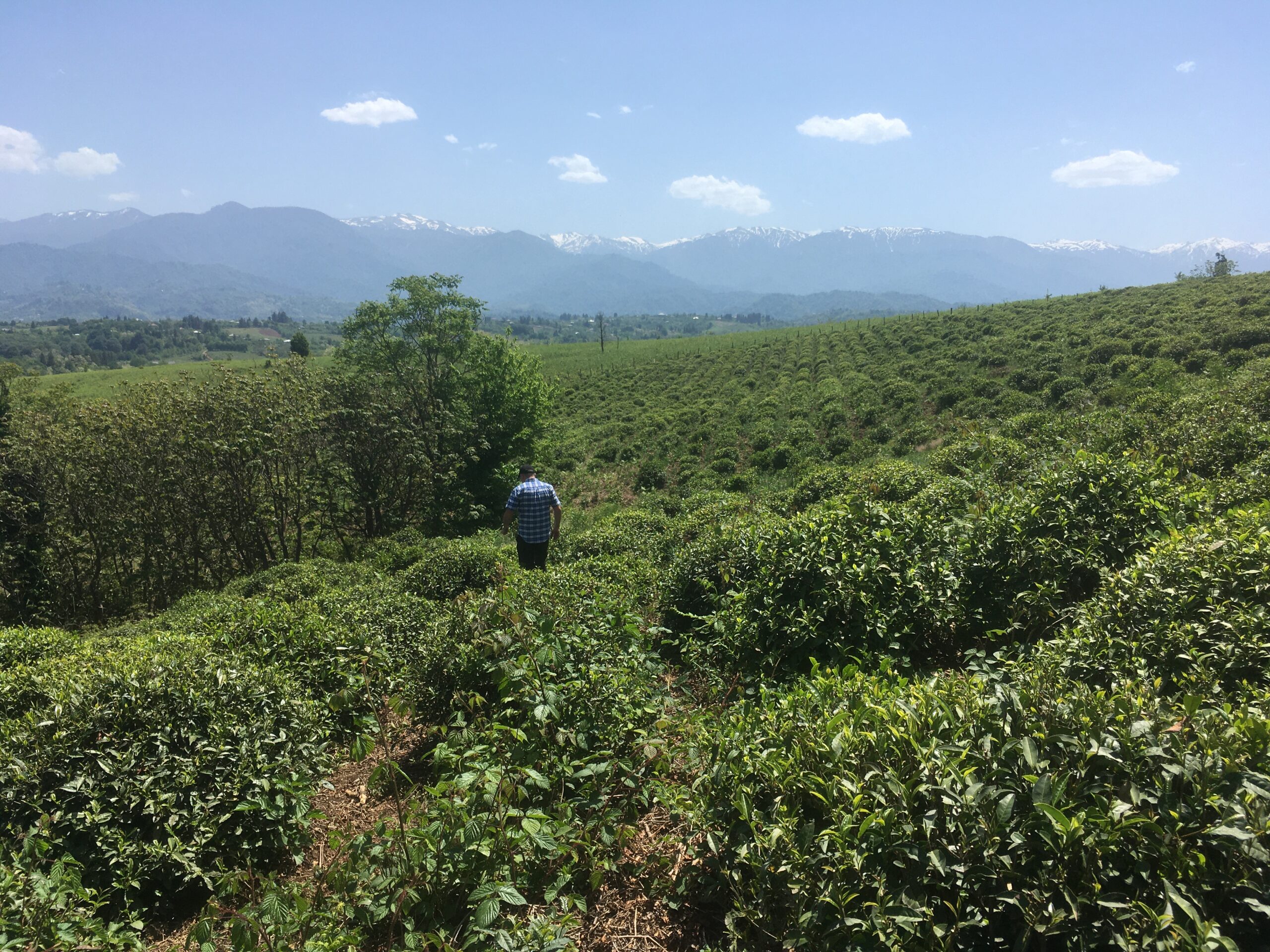
Giorgi Maisuradze in the iconic tea fields of Nagomari, Guria.
Other Regions
Besides Guria, Imereti, and Samegrelo, there are a few other regions of Georgia noteworthy for tea. The Kobuleti region of Adjara also hosts a number of tea plantations, and is particularly well-known for the seaside village of Chakvi where the famous Chinese master Liu Junzhou (Lao Jin Jao) first put Georgian tea on the map by winning a gold medal at the Paris World Expo of 1900 with his innovative crossbreeds. In general, the characteristics of Adjarian tea are in line with that of Gurian tea. Tea production was also widespread in Abkhazia during the Soviet period, but unfortunately has yet to go through any period of revitalization, due to the difficult political situation in the separatist territory.
The story of Georgian tea goes beyond just Camellia sinensis. Notably, Georgia has a tradition of utilizing the four-step black tea production process to ferment other botanicals. The most popular of these in Georgia is blueberry leaf tea, which is foraged from highland forest and alpine pastures all over western Georgia and used to create a uniquely refreshing drink. Certain tea masters, like Shota Kopaliani of Lechkhumi, use these methods to ferment a wide range of other fruit leaves, such as blackberry, mulberry, and quince. And beyond the west Georgian heartland of tea, the highland regions from Khevi to Trialeti to Javakheti are the habitat from a wide range of other plants which are used for herbal infusions, such as fireweed, sea buckthorn, and wild thyme.
See For Yourself
Although Georgia is a fairly small country, it possesses a wide-ranging cultural and environmental diversity between its numerous regions. These regional distinctions also apply to Georgian teas – between the thick forests and windswept plateaus of Imereti, the humid lowlands of Samegrelo, and the rich traditions of Guria, the Georgian tea industry offers a broad selection of different terroirs and methodologies which can compel the interest of any tea enthusiast. To learn more about the specific individuals behind these teas, I encourage you to browse the detailed profiles of the tea makers found throughout this website. If you have any questions about sourcing these teas for yourself or are interested in arranging a visit to experience Georgia’s tea regions in person, please do not hesitate to get in touch.
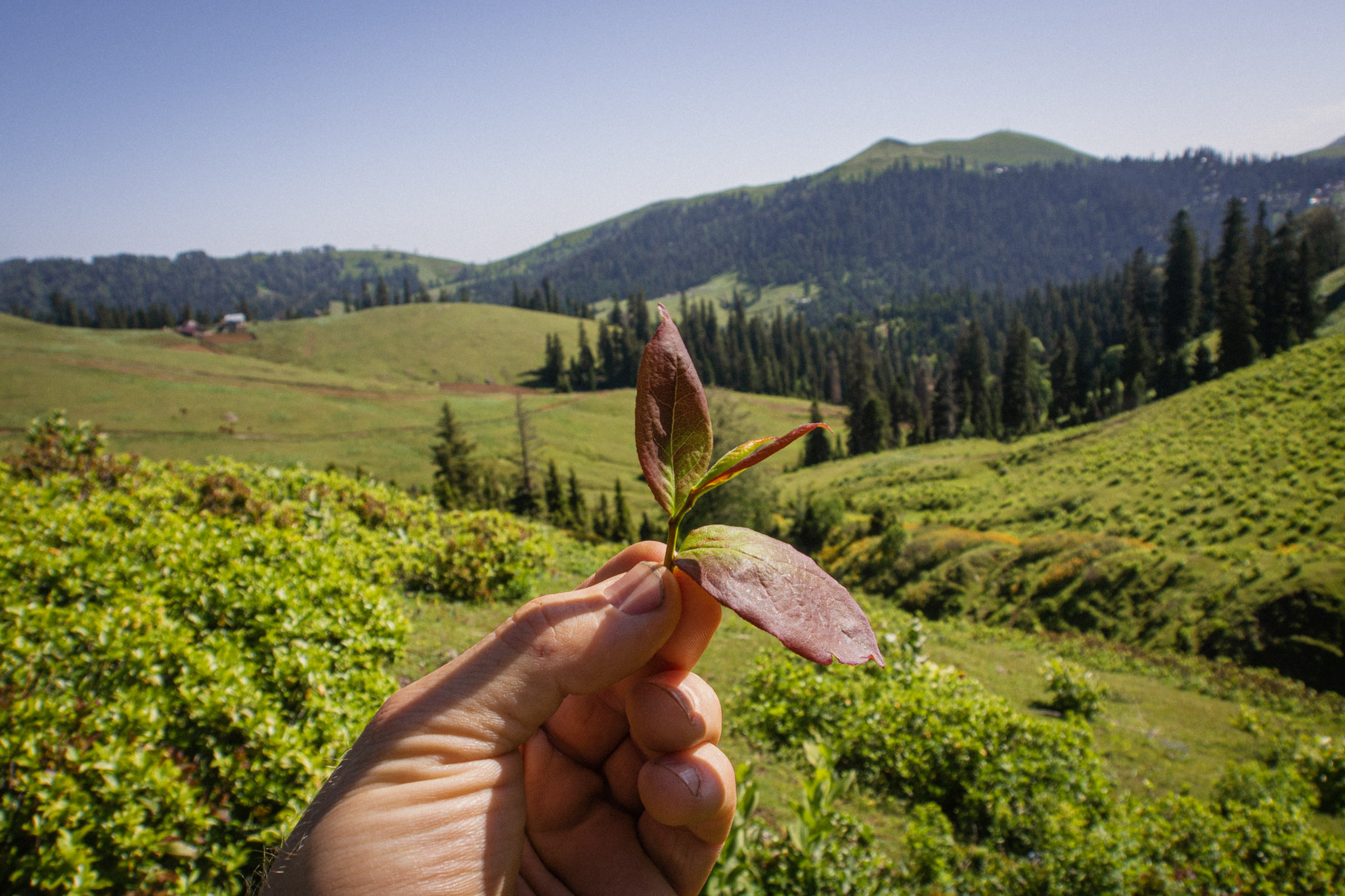
Blueberry leaf country in highland Adjara
All content on this website is copyright of their respective creators. Please do not reuse without permission. Contact the webmaster for more information.