Science and Health Benefits of Georgian Tea
The emergence of the Georgian Caucasus as a premier region for specialty tea is supported by a growing body of scientific research. The historical narrative of the creation of Georgian tea cultivars is very interesting in its own right, but for the most part, the unique chemical composition of Georgian Camellia sinensis bushes is a direct result of its extreme northern latitude and specific environmental stressors. Recent studies have quantified the health benefits and metabolic profile of these high-latitude cultivars.
Terroir-Induced Bioactivity and Stress Effects
Tea plants in Georgia are subject to a vital winter dormancy period, a phenomenon not found in tropical tea-producing regions. This cold stress acts as a natural biostimulant. To survive freezing temperatures, the bushes produce higher concentrations of secondary metabolites, specifically polyphenols and catechins, which serve as a biological defense mechanism (Lachowicz-Wiśniewska et al., 2025).
Laboratory analysis has confirmed that Georgian green teas often exhibit a higher concentration of Epigallocatechin gallate (EGCG) compared to many mass-produced tropical varieties. EGCG is the primary antioxidant responsible for the anti-inflammatory and cardioprotective properties associated with tea. Research indicates that the specific acidity of Georgian soils – particularly the red and yellow soils (krasnozems and zheltozems) of Guria and Adjara – further stimulates the production of these bioactive compounds (Lachowicz-Wiśniewska et al., 2025; FAO, 2022).
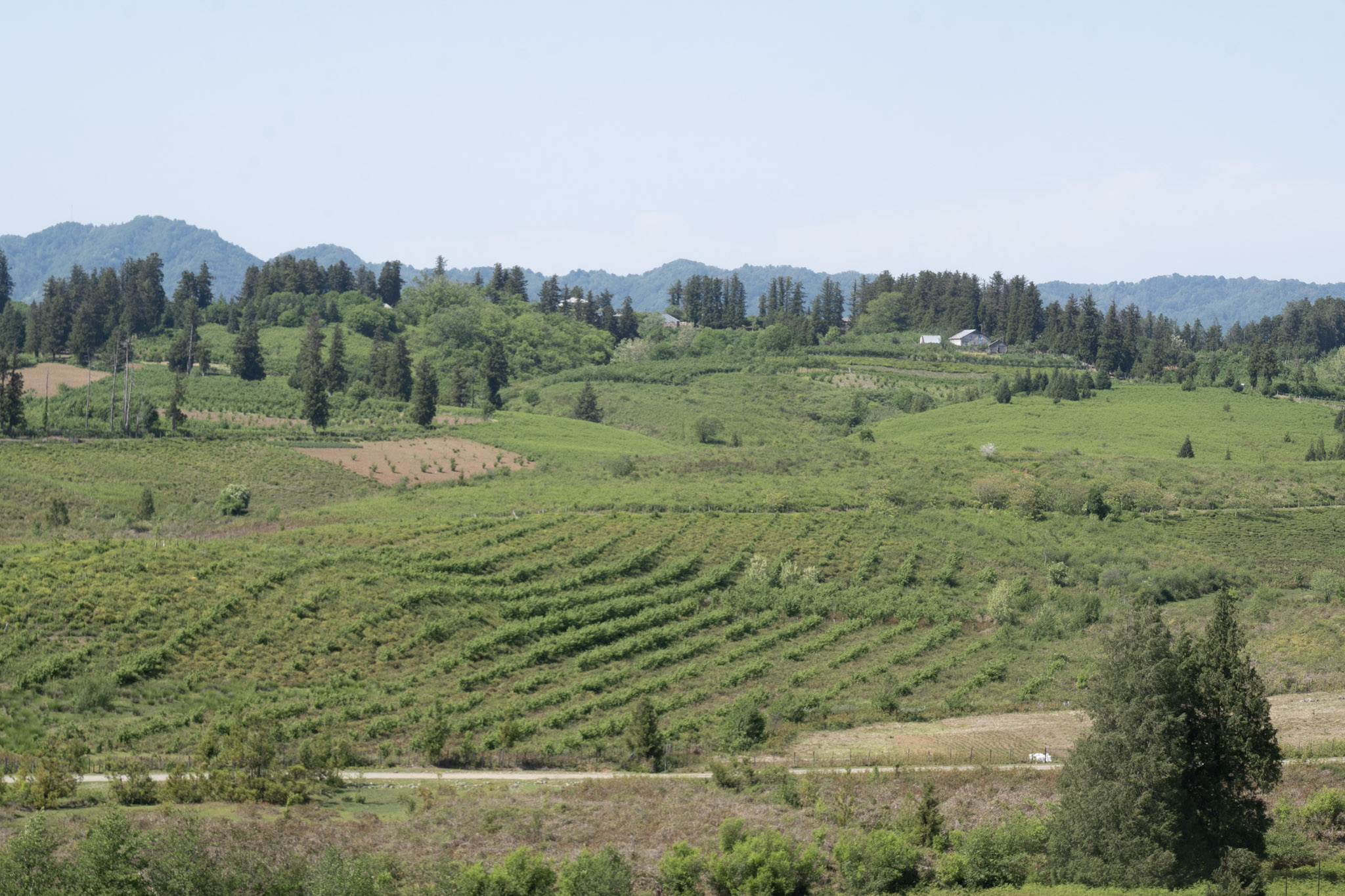
Tea field in Guria, belonging to the Zhgenti sisters
Heavy Metal Safety and Passive Water Purification
One of the most significant scientific advantages of the Georgian tea industry is its chemical purity. A 2025 study examining plantations across the Caucasus found that levels of toxic heavy metals such as lead (Pb), arsenic (As), and cadmium (Cd) were either completely undetectable or significantly below international safety thresholds (Lachowicz-Wiśniewska et al., 2025). This safety profile is attributed to the enforced rest period following the fall of the Soviet Union and subsequent collapse of the Georgian tea industry in the 1990s, during which fallow land naturally cleansed itself of industrial inputs.
It is of note that recent research from Northwestern University (2025) identified a passive health benefit during the tea brewing process. Tea leaves, particularly those with a high surface area, act as a natural adsorbent. During steeping, the leaves can trap and remove approximately 15% of lead present in the brewing water (Shindel et al., 2025). This indicates that high-quality Georgian tea not only avoids adding contaminants but may actively reduce the consumer's exposure to heavy metals found in local water supplies.

Metabolic and Neuroprotective Properties
The health profile of Georgian tea extends to metabolic regulation. Scientific evaluations of Georgian cultivars have shown a high capacity for inhibiting enzymes such as alpha-amylase and alpha-glucosidase (Lachowicz-Wiśniewska et al., 2025). This inhibition slows the breakdown of starches into sugars, which can assist in managing blood glucose levels.
On a neurological level, the combination of L-theanine and caffeine in these cultivars provides a synergistic effect on cognitive function. The relatively high levels of L-theanine found in northern-grown plants are associated with promoted focus and reduced cortisol response compared to standard caffeine sources (ISET, 2021).
Zero-Waste Potential
One significant recent study has evaluated the potential of the entire tea plant in the Georgian context. Recent analysis of tea fruit shells and seeds from Georgia has revealed distinct profiles in the specimens. Fruit shells were found to possess higher antioxidant capacities than the leaves in certain metrics, as well as elevated manganese levels (Lachowicz-Wiśniewska et al., 2025), while seeds were observed to be rich in apigenin C-glycosides, demonstrating high efficacy in modulating starch digestion (Lachowicz-Wiśniewska et al., 2025).
References
ISET Policy Institute (2021). The Georgian Tea Sector: A Value Chain Study. Research Report.
Lachowicz-Wiśniewska, S., et al. (2025). "Organ-specific bioactivity and mineral profiles of Camellia sinensis across contrasting plantations in the Georgian Caucasus." Industrial Crops and Products, 237, 122222.
Prikhodko, D., et al. (2022). Tea sector review – Georgia. FAO Investment Centre Country Highlights, No. 15. Rome, Food and Agriculture Organization of the United Nations.
Shindel, B., et al. (2025). "Adsorption of Heavy Metals from Water during Tea Brewing." ACS Food Science & Technology.
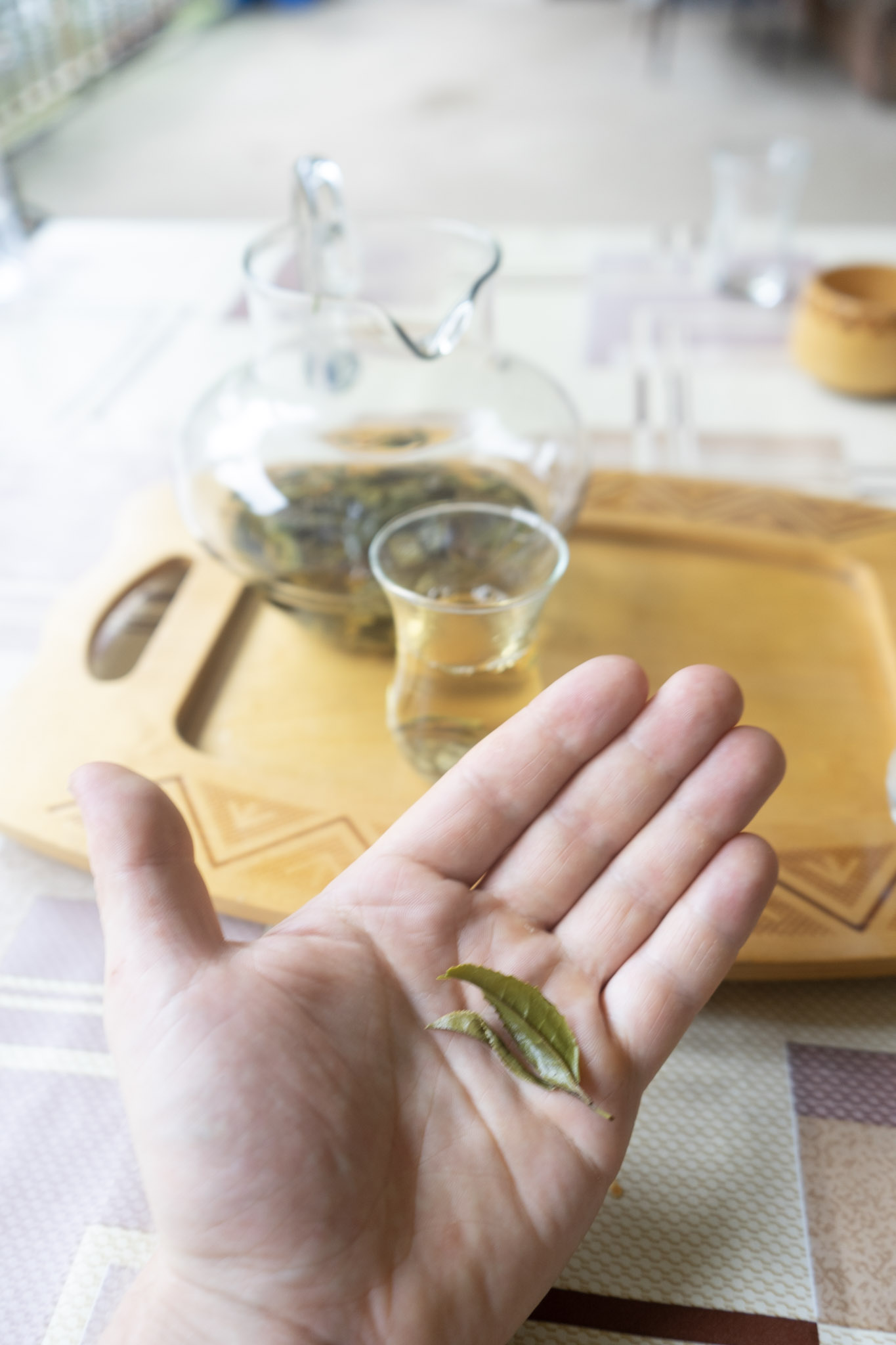
Some Bitsadze white tea leaves
All content on this website is copyright of their respective creators. Please do not reuse without permission. Contact the webmaster for more information.