A Brief History of Georgian Tea Cultivars
The story of Georgian tea is one of biological resilience. Tea is traditionally a tropical or subtropical crop; when the Russian Empire introduced the culture of tea growing to Georgia, the conditions of its geography at the base of the Caucasus mountains necessitated the development of varieties that could survive periods of freezing in winters. Eventually, a pioneering era of Soviet agroscience led to the creation of cultivars that could withstand temperatures as low as -15°C (and even lower under snow cover).
Early Experiments
The quest for a tea variety that would thrive in Georgia began in the 19th century. Tea was introduced to Georgia as early as 1809 by Mamia Gurieli, a Gurian prince, who planted a few bushes as decoratives in his garden. The first commercial tea plantation in Georgia was started in Goraberezhouli village in 1847 by Mikheil Eristavi, another nobleman from the Guria region, who smuggled seeds out of China in pieces of bamboo. Although the quality of the tea was widely praised, widespread production would not take hold for some time; the standard Chinese tea seeds (Camellia sinensis var. sinensis) were not always hardy or productive enough in the frost-prone foothills of the subtropical Caucasus.
Commercial viability began to be a consideration after the Crimean War between the Russian and British empires, when Russia tea merchants began to look for an independent source of tea which wouldn’t rely on British trade. The real breakthrough came with the work of Liu Junzhou (Lao Jin Jao), a Chinese tea master who was invited to help establish the Georgian tea industry by the Russian tea merchant Popov. Liu arrived in 1893 with a cargo of tea seeds and seedlings and a brigade of experienced Chinese tea workers, setting up an experimental plantation in Chakvi. Liu focused on selecting and acclimatizing bushes that could survive the local winters, eventually producing a black tea which won a gold medal at the 1900 Paris World Expo. These Chinese varieties came to be known as Kimong in Georgia.
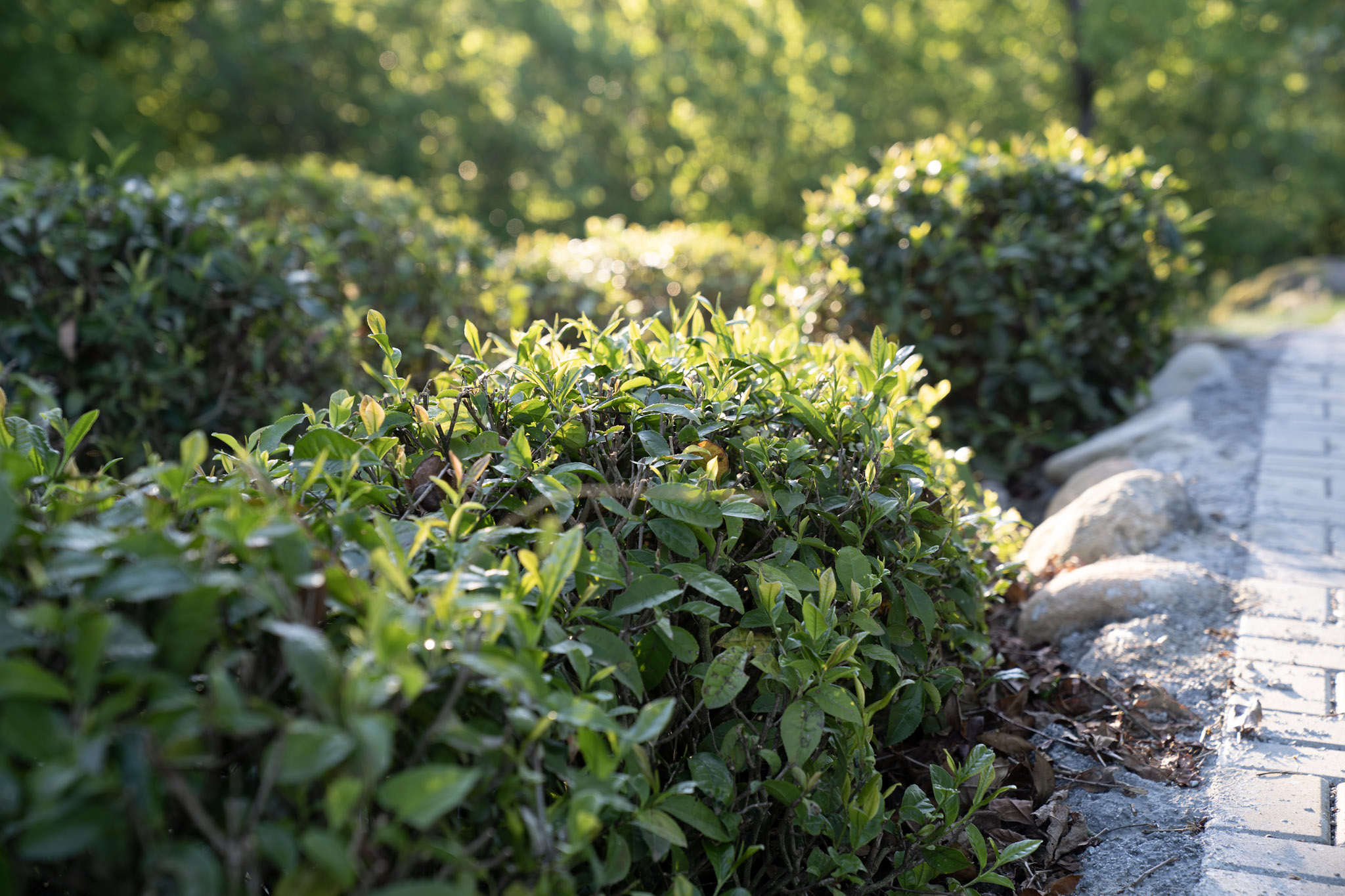
Tea bushes at Komli – likely descendants of early crossbreeds from the pre-Soviet period.
The Soviet Era: Scientific Breeding
Liu’s tea bush varieties were a great success, but as the Soviet Union began industrializing Georgia after its takeover in 1921, higher levels of production were demanded, necessitating hardier, more productive bushes and the establishment of plantations in more remote areas. The most significant leap in Georgian tea genetics occurred at the Research Institute of Tea and Subtropical Cultures in Anaseuli, Guria. It was here that Ksenia Bakhtadze, a legendary Soviet scientist, revolutionized the industry, systemically crossing different tea varieties to create hybrids with specific traits.
Bakhtadze spent decades on generational selection, working with Chinese small-leaf and Assam tea varieties. She would eventually help develop nineteen different hybrid varieties. Her work focused on three primary goals: good flavor, high yield, and, crucially, frost resistance. Some of her most significant cultivars were Kartuli (Georgian) Selective Tea #1, #2, and #8. Kartuli #1 was a variety developed for high yields and larger leaves, intended for the slightly warmer southern regions like Adjara, while Kartuli #2 was specifically engineered for the northern and more inland regions (Abkhazia and Samegrelo). Kartuli #2 was significantly more frost-resistant than its predecessors, allowing tea to be grown in areas that would have previously killed a standard plantation during a cold snap. Kartuli #8 was even more frost-resistant, being given the name “Hero of Winter”.
The Kolkhida Cultivar
The crowning achievement of Georgian tea breeding is the Kolkhida (Colchic) variety, developed between the 1950s and 1970s. Kolkhida was bred to be a "super-variety" – exceptionally resistant to both cold and drought while maintaining a horizontal growth habit that made it easier to harvest.
Beyond its hardiness, Kolkhida became famous for the favorable properties of its tea leaves. Kolkhida bushes produce a tea with a high concentration of aromatic oils and a naturally sweet, malty profile with very low astringency. Even today, the presence of Kolkhida bushes on a plantation is considered a hallmark of quality, as these plants are particularly well-suited for high-grade specialty teas that can be grown without the need for pesticides.
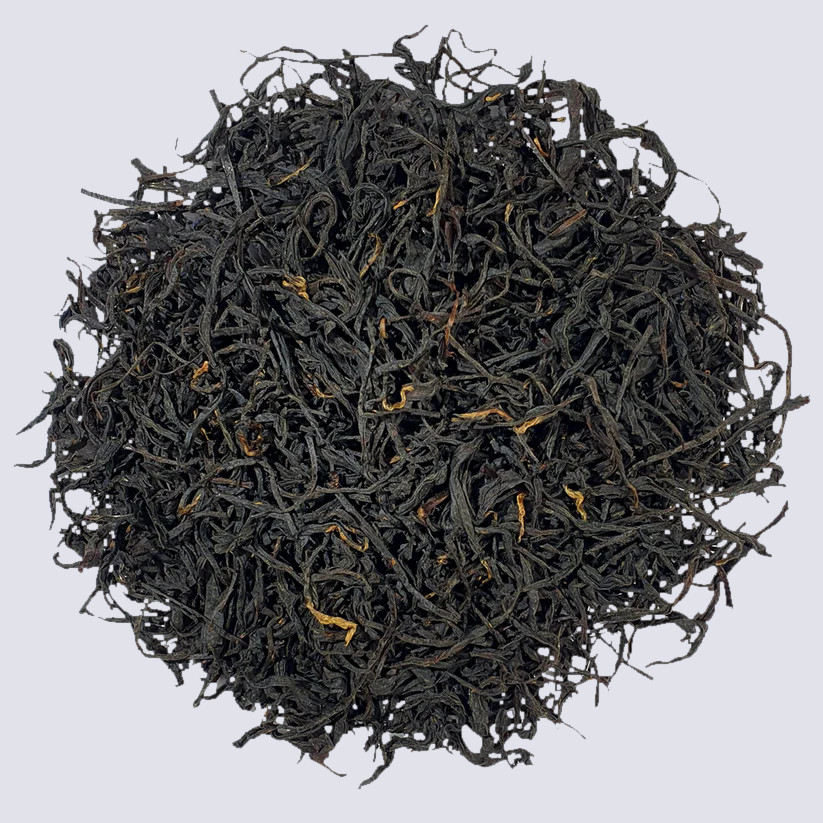
Black tea from the GreenGold plantations grown from Kolkhida leaves.
Death – and Rebirth
The zenith of the Kolkhida era was abruptly cut short by the collapse of the Soviet Union in 1991. As Georgia descended into a period of economic crisis, civil war, and the loss of its primary export markets, the massive industrial tea machine ground to a halt. Factories were shuttered or stripped for scrap metal, and tens of thousands of hectares of plantations were simply left to the elements. For some regions, this abandonment lasted only a few years; for others, the silence stretched over more than three decades. Today, a vast landscape of tea remains dormant across Western Georgia, hidden beneath a gentle but persistent covering of ferns, blackberry brambles, and acacia trees.
Paradoxically, this neglect became the modern Georgian tea industry's greatest ecological asset. The three-decade fallow period allowed soils to fully recover from the heavy chemical inputs and aggressive mechanization of the Soviet era. During this time, a form of natural selection took place; while weaker plants perished, the hardiest Kolkhida and Chinese-Assam hybrid bushes thrived. Spontaneous cross-breeding occurred in the wild, further localizing the plants' resilience and creating a high-vitality terroir that is now perfectly suited for organic production. Tea makers like Grigol Bitsadze and Tornike Shekiladze say that the tea bush has adapted so well to life as a member of wild Colchic forest ecosystems, it’s hard to imagine that it is actually not a native plant.
A Future Rooted in Resilience
Today, the rehabilitation of these wild gardens is at the heart of the Georgian tea renaissance. The combination of different legacies – from the pioneering work of Mikheil Eristavi and the carefully selected cultivars of Liu Junzhou, to the broad-ranging experiments of the 20th-century Soviet scientists, to the Earth’s restorative work after more than thirty years of natural purification and rewilding, has left Georgia with a unique competitive advantage: thousands of hectares of pesticide-free, frost-resistant tea bushes that are ready for artisanal production. As modern tea makers pull back the ferns and reclaim these historic plantations, they are not just harvesting leaves; they are reviving a specialized lineage of plants that have quite literally stood the test of time, a heritage that allows Georgia to compete as a premiere destination for high-quality, sustainable tea.
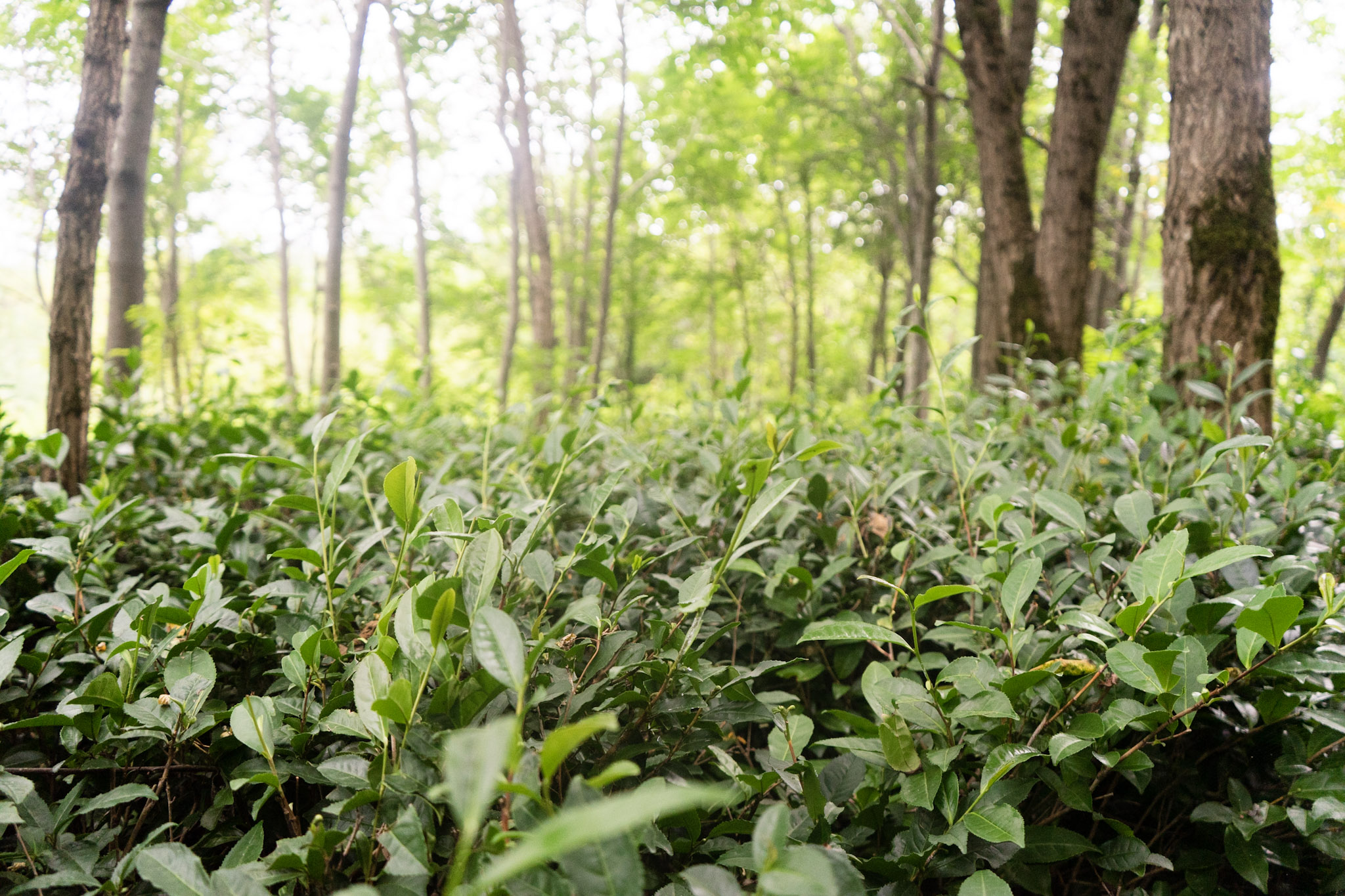
Tea bushes in the forest at the Bitsadze brothers' plantation.
All content on this website is copyright of their respective creators. Please do not reuse without permission. Contact the webmaster for more information.